8 Best Selenium Alternatives in 2026, Ranked by What They Fix
Eight Selenium alternatives compared on who writes the tests and who fixes them when the UI changes, from Playwright and Cypress to agentic testing.

Every Selenium alternatives list opens with Playwright and Cypress, then calls it a decision. Both are better-built frameworks than Selenium, and both now ship AI that can repair a failing test. Neither changes who owns the test. When a designer renames a button at 11pm, the test still breaks, and the AI only changes who drafts the fix.
So this list sorts eight tools by one question. How much of the work of writing and maintaining tests does each one take off your team? Some remove the flaky waits and the setup and leave the authoring exactly where it was. Some remove the code but keep a person in the authoring seat. One generates the first suite and leaves authoring to the flows you name. Where a tool sits on that scale decides whether you solved your problem or moved it.
What you’ll learn
- Why QA teams leave Selenium, ranked by what each complaint costs you
- Eight alternatives compared on who repairs the test when your UI changes
- Where each tool’s AI repair actually ships today, from its own docs and pricing pages
- Which tools take the authoring off your team, and which only patch tests faster
Testing or Scraping? Pick Your Half First
Ask Google, Claude or ChatGPT for a Selenium alternative and you get answers to two different questions. Either you drive a browser to test software, or you drive one to scrape data off a page. The tool sets barely overlap, and shopping the wrong half wastes a week. The rest of this page answers the testing side, where Selenium started and where its maintenance bill lands.
If you came for scraping, three options cover it:
- JavaScript-rendered pages: Playwright and Puppeteer drive a real browser and wait for the page’s scripts to finish rendering.
- Static pages: Raw HTTP with Python’s Requests plus BeautifulSoup, or Scrapy once you’re running at scale, beats any browser on speed and weight.
- Anti-bot walls: Managed APIs like Firecrawl take the proxies and blocking off your plate.
Requests, BeautifulSoup, Scrapy, and Firecrawl have no place in a regression suite. They stop here.
Why Teams Leave Selenium
Selenium earns its reputation. It’s free, it speaks Java, Python, C#, Ruby, and JavaScript, it drives every major browser, and two decades of community answers mean somebody has already hit your problem.
Nobody’s arguing Selenium is a bad tool. The complaints are narrower than that. Selenium was built when a release was a quarterly event, and almost every gripe below is a symptom of running that model against a product that ships daily. Ranked by what they cost a team:
The two that force a migration
- Flakiness from timing and stale elements. Selenium leaves waiting to you, so tests fail on slow page loads until somebody wires up explicit waits by hand. A red suite nobody believes is a suite nobody runs.
- A steep learning curve that decides who can contribute. Selenium expects real programming ability. A QA lead at an insurance firm told us her manual testers didn’t have the Selenium and Java skills, so she went looking for something codeless. Until they learn, coverage queues behind whichever engineers can write it.
The rest, mostly setup tax
- No built-in reporting or test runner. Allure, ExtentReports, TestNG, or JUnit get bolted on before anyone can see what failed.
- Driver setup per browser. Older complaints dwell on it, but Selenium deleted most of this chore itself when Selenium Manager started fetching drivers automatically in version 4.6.
- No native mobile or desktop coverage. Selenium drives browsers. iOS and Android mean adding Appium and a second skill set.
- Long run times at scale. Suites heavy on page objects and element interactions stretch CI cycles as they grow.
Underneath the two that force a migration sits one design decision. Every Selenium test is a script someone wrote against an XPath or CSS selector, so a UI change breaks tests that had nothing to do with the change and a person repairs each one by hand. The bill scales with how often your product changes, which is why daily shippers hit it first. Our test maintenance cost calculator puts hours against it if you’ve never counted.
A QA lead on a six-person team covering several web products described the arc to us last year. Their Selenium regression automation didn’t survive a UI that changed with every feature release, so the newer products went to Playwright, and the locators kept changing there too. Switching frameworks moved the problem without shrinking it.
Is Selenium Outdated in 2026?
Selenium isn’t outdated in 2026 so much as misassigned. The JavaScript bindings alone shipped 15 releases in the 12 months to 15 October 2026, per npm’s version history, and Selenium 4 added the modern WebDriver BiDi protocol.
Its real base is Python, not JavaScript. The selenium package on PyPI logged about 7.4 million downloads in the most recent week PyPI Stats reported, per PyPI Stats, and no tool on this list covers more languages. What aged is the job teams keep handing it, catching regressions in a product that redesigns itself every week.
That distinction decides whether you should leave. Selenium suits a stable app and a team that wants every test in its own repo, in its own language, under its own control. A suite that has to keep pace with constant UI change is the situation most of the tools below were built for.
Keep Selenium for a stable app you want fully in code. Move when weekly redesigns keep breaking its tests.
Selenium Alternatives at a Glance
The short version: stay in code with Playwright, hand authoring to non-engineers with testRigor, or take authoring off your team with Pie. The other five sit between those three, and four questions decide where:
- Who repairs a broken test when the UI changes, a person or the tool
- What you author, code, plain English, a recording, or nothing
- Platform reach, web only or native mobile too
- What you assemble yourself, drivers, runners, reporting
Capability and pricing lines come from each tool’s own docs and pricing pages, and ratings from G2. The four open-source frameworks carry npm’s download count for the full week of 28 September to 4 October 2026, which counts CI machines as well as people.
| Tool | Approach | Who repairs a broken test | Platforms | License | Best for |
|---|---|---|---|---|---|
| Pie | Agentic, vision-first | Self-healing, then you edit the steps | Web, iOS, Android | Commercial | Coverage before authoring |
| Playwright | Code-first framework | You in code, or opt-in AI healing | Web (Chromium, Firefox, WebKit) | Apache 2.0 | Strongest framework successor |
| Cypress | Code-first framework | You in code, or AI healing in beta | Web (Chrome, Firefox, Edge) | MIT, paid Cloud | Front-end debugging loop |
| testRigor | Plain-English platform | You in plain English, or opt-in AI healing | Web, iOS, Android | Commercial | Non-engineers writing tests |
| Katalon | Low-code platform | Self-healing (paid plans), then you | Web, mobile, API, desktop | Commercial | One low-code suite |
| mabl | Low-code SaaS | Auto-healing, then you | Web, mobile add-on, API | Commercial | Healing inside low-code |
| WebdriverIO | Code-first framework | You in code, or its AI service | Web, mobile via Appium | MIT | WebDriver breadth modernized |
| Puppeteer | Automation library | You, in code | Chrome, Firefox | Apache 2.0 | Chrome scripting and scraping |
8 Best Selenium Alternatives in 2026
Here they are, ranked by the Selenium complaint each one goes after, biggest first. The top entry goes after the cause, the tests people write and repair. Playwright and Cypress follow for flakiness, then testRigor, Katalon, and mabl for who can write a test, then WebdriverIO and Puppeteer for setup. Every entry answers two questions. What does it fix about Selenium, and what does it ask of you in return?
1. Pie, a Suite Generated Before You Write a Test
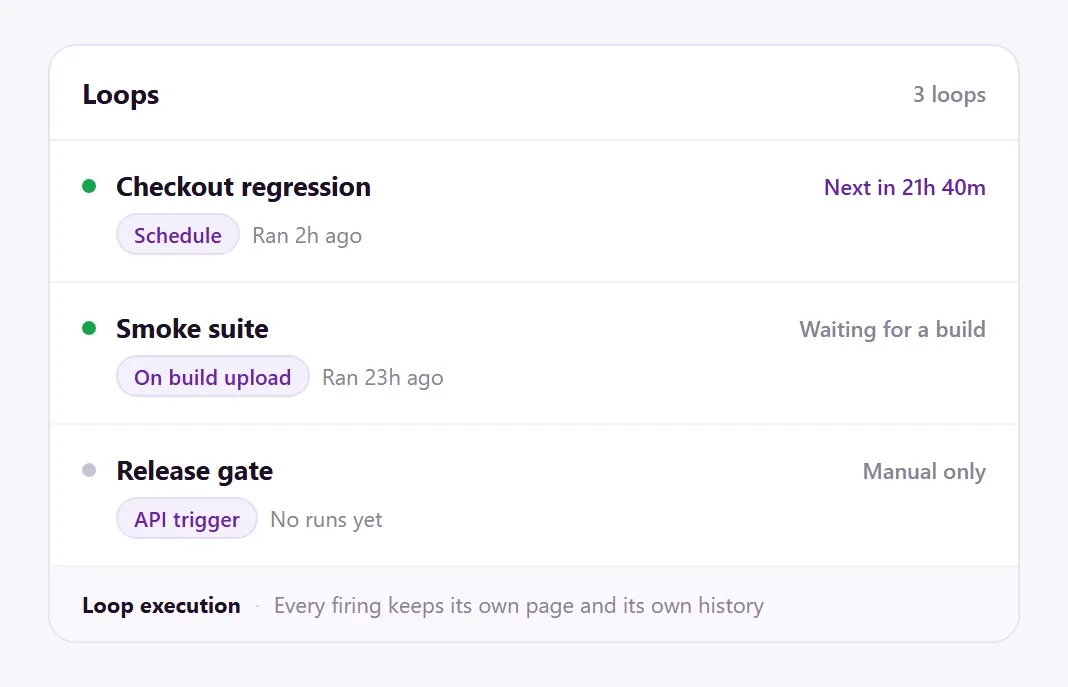
Pie is an agentic testing platform, and it tops this list because it’s the only entry whose agents start from the running app alone, with no test plan, ticket, seed test, or recorded traffic to work from. Point it at a staging URL or a mobile build and AI agents work through it the way a user would, map its features into a knowledge graph, and generate the regression suite through autonomous test discovery.
Your team authors supported tests without writing or maintaining selectors, which is the backlog that sinks Selenium suites.
Authoring stays yours when you want it. Describe a specific or edge-case flow in plain English and it gets built and run as a custom test, the same natural-language authoring testRigor is known for. Cases you already track come in as a CSV or list.
Execution is vision-first, so a renamed class or a moved button often needs no locator repair. When behavior changes on purpose, you edit the test’s steps and re-run it. One platform covers web plus native iOS and Android apps, with no second tool for mobile.
Rating: 5.0/5 from 3 reviews on Gartner Peer Insights.
Pricing: Custom, quoted on request.
Strengths:
- Coverage before anyone writes a test, generated by agents that map the app across web and native iOS and Android
- Vision-first execution and self-healing tests, so after a UI change you re-run and inspect the results
- Plain-English custom tests for the flows you care about, plus CSV import for the cases you already track
- Pie Loop tests pull requests and, with code access and fixes switched on, prepares a proposed fix for your team to review
Trade-offs:
- Native mobile runs on iOS simulators and Android emulators as standard, not a physical device lab
Best for: Teams shipping daily who want regression coverage that keeps pace with the app without anyone writing scripts or maintaining selectors.
Not for: Teams that want a code-first framework with every test living in their repo.
2. Playwright, the Strongest Code-First Successor
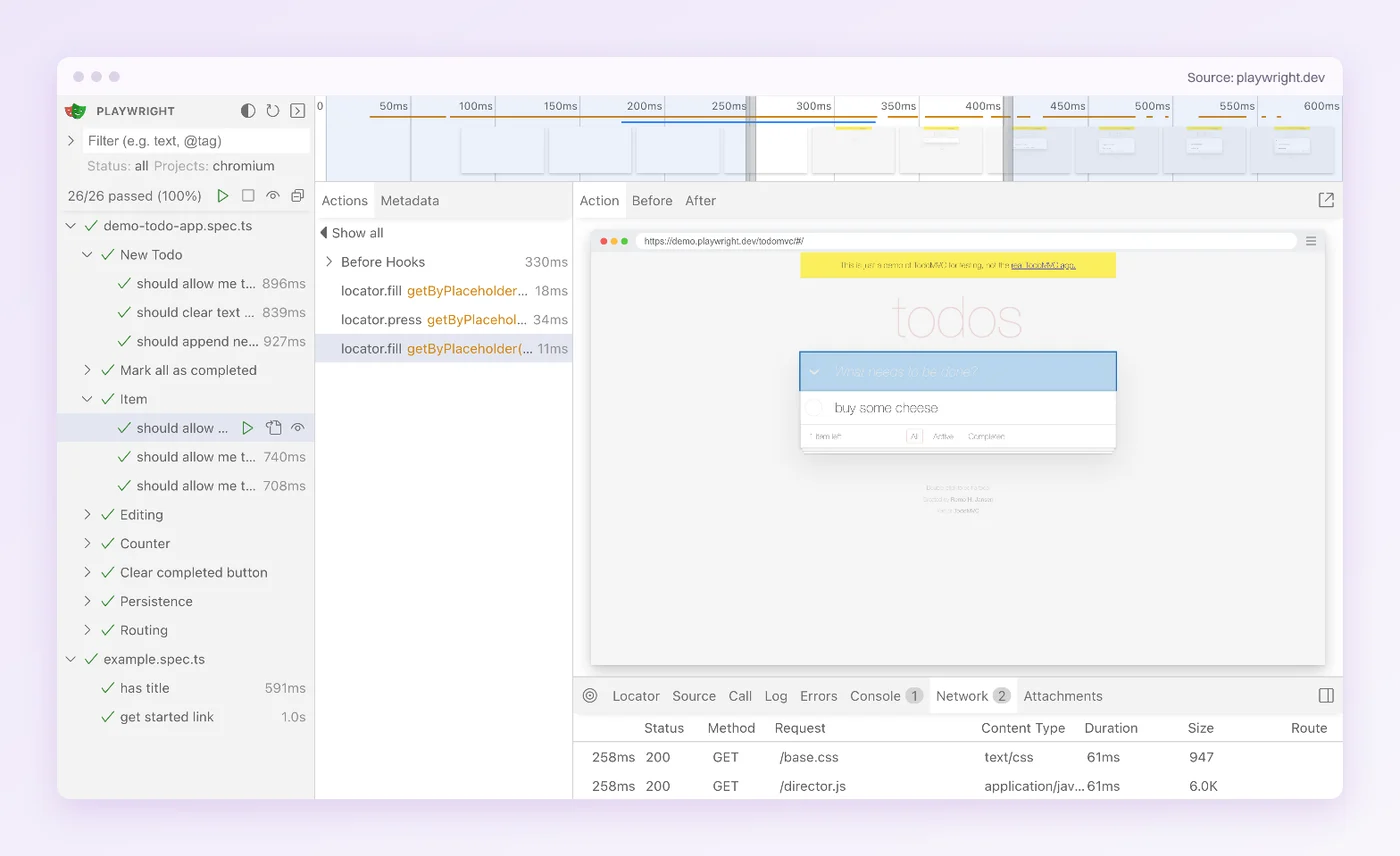
Playwright is Microsoft’s open-source automation framework and the tool most people mean by “the modern Selenium.” It earns second place because it answers the top complaint above, flakiness, without asking anyone to change how they work. Auto-waiting cuts down the timing failures behind stale-element errors.
What it keeps is the script. Playwright now ships opt-in test agents. A planner and a generator explore the app from your prompt and a seed test, then write Playwright code, and a healer runs failing tests and patches them. Every output lands as test code your team reviews and owns. Our Playwright vs Selenium breakdown goes deeper on what the migration costs.
Adoption: 86.2 million downloads of @playwright/test in the week of 28 September to 4 October 2026, per npm’s download API.
Rating: 4.8/5 from 14 reviews on G2.
Pricing: Free and open source under the Apache 2.0 license.
Strengths:
- The runner, assertions, tracing, and an HTML reporter ship in the box, so nothing gets bolted on
- One API drives Chromium, Firefox, and WebKit, with auto-waiting on actionability checks before every action
- Codegen and the test agents draft tests from a recording or a prompt
Trade-offs:
- The healer agent suggests patches such as a locator update or a wait change, which your engineers review and keep
- No native mobile app testing, since device descriptors emulate mobile browsers and Android automation is experimental and limited to Chrome and WebView
Best for: Engineering teams keeping tests in the repo who want the best-designed code-first framework available.
Not for: Teams whose bottleneck is test upkeep, or who need native iOS and Android coverage.
3. Cypress, Best Debugging Loop for Front-End Teams

Cypress is a JavaScript end-to-end framework that runs inside the browser, and its reputation rests on developer experience. It answers Selenium’s flakiness complaint from the opposite direction. Rather than making tests easier to write, it makes failures easier to see, and you watch app state change command by command instead of reading a stack trace. The architecture that makes that possible is also its ceiling, which our Cypress vs Selenium comparison covers in detail.
Its own AI answer to breakage is the cy.prompt() command, in beta and running through Cypress Cloud. It turns plain-English steps into executable Cypress commands, so the test still lives and runs as Cypress.
Adoption: 7.4 million downloads of cypress in the week of 28 September to 4 October 2026, per npm’s download API.
Rating: 4.7/5 from 107 reviews on G2.
Pricing: The app is free under the MIT license. Cypress Cloud starts free at 500 test results and 100 cy.prompt runs a month, and its Team plan runs $67 a month billed annually, per Cypress’s pricing page.
Strengths:
- A live view of each run in the browser as the commands execute
- Time-travel debugging that shows app state before and after every command
- A free app, with Cloud only when you want recording, analytics, or parallel runs
Trade-offs:
- Parallel runs across machines go through Cypress Cloud rather than the free app alone
- WebKit and Safari support is experimental and opt-in, per Cypress’s own docs
Best for: Front-end teams chasing the fastest feedback loop while debugging a web app.
Not for: Teams needing Safari coverage in CI, native mobile apps, or parallel runs without a Cypress Cloud account.
See Autonomous Coverage on Your App
Point Pie at a staging build. Get a generated suite back.
4. testRigor, Plain-English Test Authoring
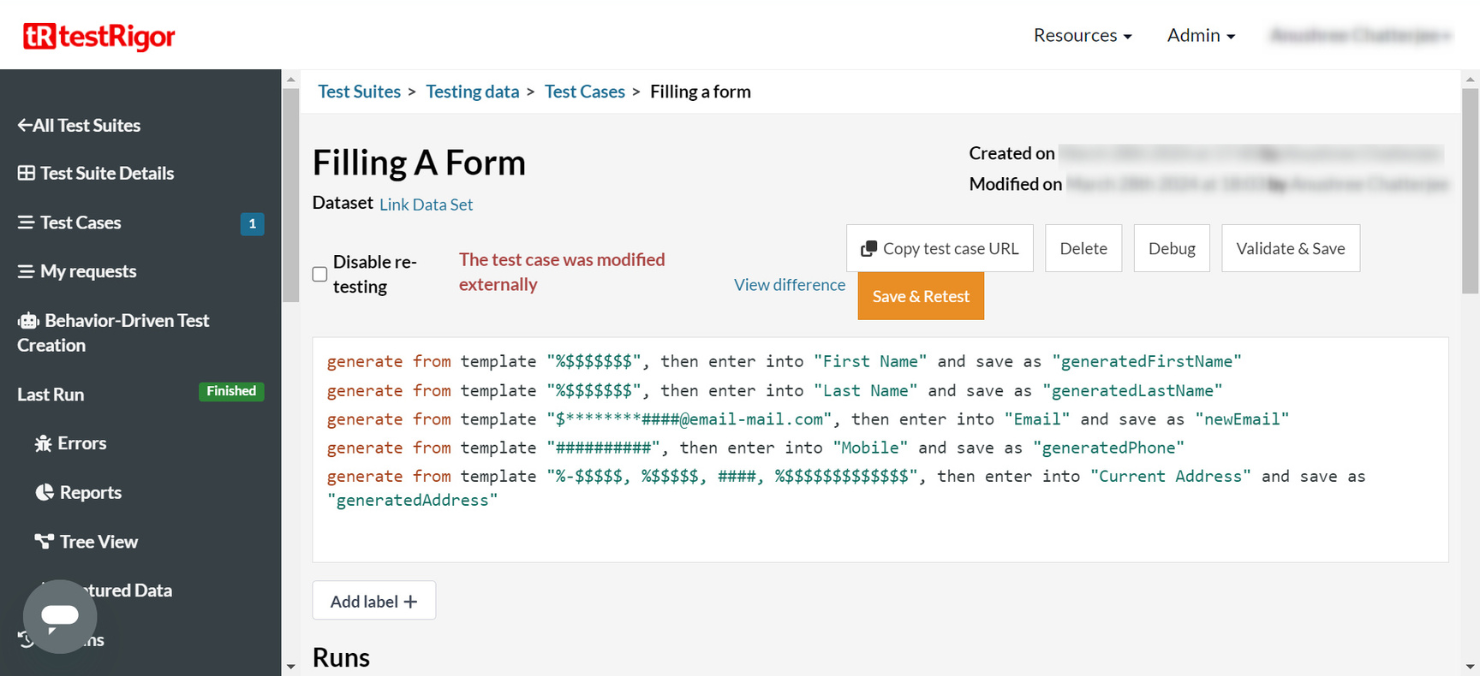
testRigor is a cloud platform where a test step is an English sentence, not a line of code. It removes the complaint that bites Selenium teams second-hardest, that only someone fluent in Java or Python can add coverage. Anyone on the team can author here, and because steps are not bound to XPath or CSS, a UI change doesn’t automatically break them.
It can also draft cases with AI from a written description of your app. A person decides what to test and owns the suite, so the authoring queue shrinks without disappearing.
Rating: 4.6/5 from 47 reviews on G2.
Pricing: A free public plan, a 14-day free trial for private tests, and custom Enterprise pricing.
Strengths:
- Plain-English steps that people who don’t code can write and read
- Synonym matching on by default, plus Vision AI healing that repairs a broken step and labels the fix so you can roll it back
- AI that drafts test cases from a written description of your app
Trade-offs:
- AI healing is opt-in, so you switch on Vision AI and auto-healing before a heal runs
- The suite lives in testRigor’s cloud in its own step language, not in your repo
Best for: Mixed teams where product and QA people write the tests in plain English.
Not for: Teams that don’t want to own a test suite at all, or who want tests versioned next to the code.
5. Katalon, One Low-Code Suite for Web, Mobile, and API
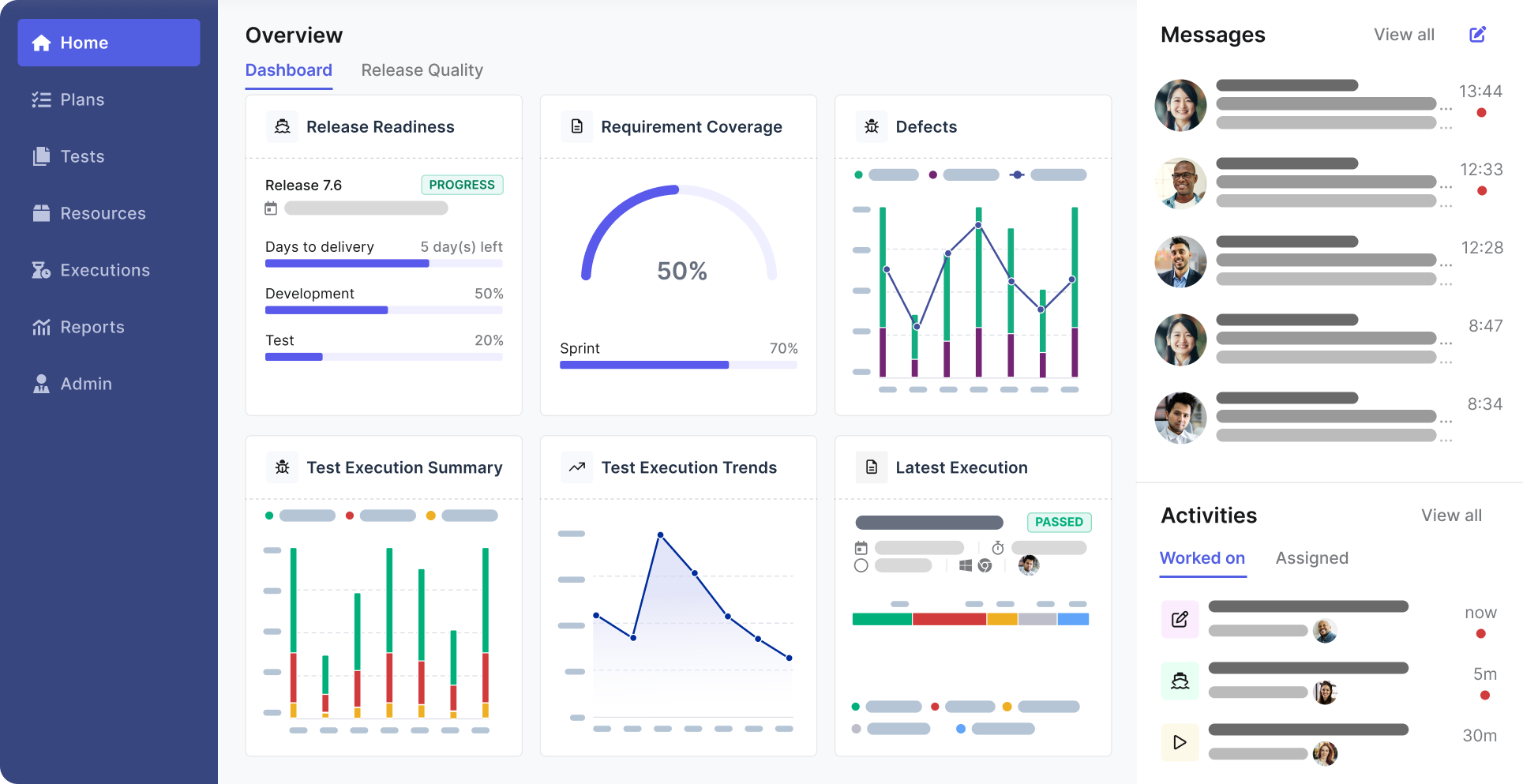
Katalon is a low-code platform built on top of Selenium and Appium, which makes it the shortest conceptual move on this list. It earns its place by wrapping everything Selenium leaves to you, handing over recording, reporting, and CI integration in one product. Web, mobile, API, and desktop tests live under one license, and Selenium IDE projects import their tests and suites.
The engine underneath is still the one you were leaving. Katalon’s self-healing, included with paid Studio licenses but not the free tier, tries an object’s backup locators, then an AI fallback, when the main one breaks. Robot Framework makes the same wrap-the-engine move in open source, keyword files over SeleniumLibrary, which is why Robot Framework vs Selenium gets its own comparison.
Rating: 4.4/5 from 228 reviews on G2.
Pricing: A free tier, then Professional at $2,199 per seat a year, and Enterprise quoted on request, per Katalon’s pricing page.
Strengths:
- Recording, reporting, and CI integration in one product instead of a framework you assemble
- Coverage beyond browser UI, including web services and desktop applications
- Self-healing, AI root-cause analysis, and AI script generation from the Professional plan up
Trade-offs:
- It’s Selenium and Appium underneath, so self-healing repairs locators rather than removing them
- The self-healing and AI features sit behind a paid license
Best for: QA groups consolidating web, mobile, and API tests into one low-code product.
Not for: Teams trying to escape the Selenium engine rather than wrap it.
6. mabl, AI-Assisted Low-Code Automation
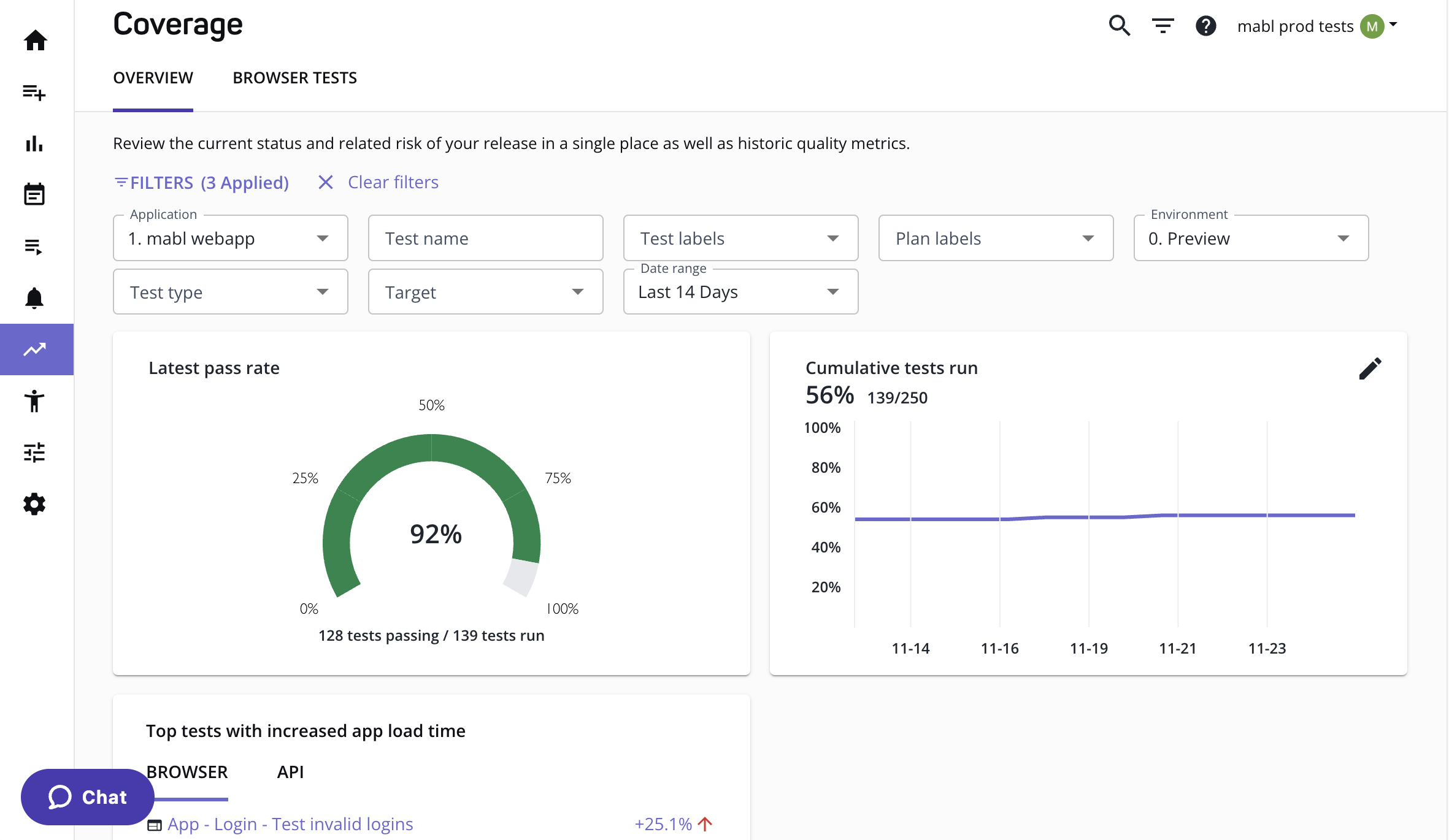
mabl is a low-code SaaS platform where you record or describe a test and its AI keeps the locators working when the UI shifts. Auto-healing aims squarely at the failure Selenium teams resent, a test breaking for a reason unrelated to the change. Healing repairs a test that someone recorded or described, so the suite still has an owner on your team.
Its newer Active Coverage builds tests from user stories, Jira tickets, or plain language. That moves authoring closer to the work, but every test starts from something a person wrote.
Rating: 4.4/5 from 40 reviews on G2.
Pricing: Custom, with a 14-day free trial and mobile app testing sold as an add-on, per mabl’s pricing page.
Strengths:
- Auto-healing built into the platform rather than bolted on
- Low-code authoring by recording or describing a test
- Active Coverage, which drafts tests from user stories, Jira tickets, or plain language
Trade-offs:
- Mobile app testing is a paid add-on to a web-first platform
- Tests start from a recording, a story, or a ticket, so a person picks what gets covered
Best for: In-house QA teams that want low-code authoring with healing built in.
Not for: Mobile-first teams, or anyone ready to stop maintaining locators at all.
7. WebdriverIO, WebDriver Breadth Modernized
Hosted by the OpenJS Foundation, the open-source WebdriverIO is the closest thing here to a like-for-like migration. It keeps the protocol Selenium teams already know, now defaulting to WebDriver BiDi, and adds the runner, reporting, and mobile reach Selenium leaves to you. Set WebdriverIO against Selenium and the move looks closer to a repackaging than a rewrite, Selenium’s model minus its worst chores.
Adoption: 3.3 million downloads in the week of 28 September to 4 October 2026, per npm’s download API.
Pricing: Free and open source under the MIT license.
Strengths:
- One framework covers browsers plus native iOS, Android, and Tizen apps through Appium
- Drivers download and update themselves from v8.14, ending per-browser driver setup
- WebDriver BiDi runs by default, with classic WebDriver available underneath
- Version 10 adds an AI service whose intent-written steps record as WebdriverIO commands and heal when the page changes, trying other recorded selectors before it calls a model
Trade-offs:
- The AI service runs on a model you bring and pay for
- Version 10 needs Node.js 22.19 or later
- JavaScript and TypeScript only, a Node.js framework by its own README, without Playwright’s multi-language bindings
Best for: Selenium teams that want the same protocol and one framework across web and mobile.
Not for: Teams wanting a language other than JavaScript or TypeScript.
8. Puppeteer, Chrome and Firefox Scripting
Google maintains Puppeteer, a JavaScript library that drives Chrome or Firefox over the DevTools Protocol or WebDriver BiDi. It lands last because its own README describes a library for controlling the browser, with no test runner and no assertions of its own. Where it beats everything above is a narrow, fast job, so it works best paired with a test framework.
Adoption: 14.3 million downloads in the week of 28 September to 4 October 2026, per npm’s download API.
Pricing: Free and open source under the Apache 2.0 license.
Strengths:
- Direct DevTools Protocol access, which makes browser scripting fast and precise
- Support for both Chrome and Firefox, where it once ran on Chrome alone
- Installs a compatible Chrome on setup, so there’s no driver version to match
Trade-offs:
- No WebKit or Safari engine, and no native mobile
- No test runner and no assertion library, so it pairs with Jest, Mocha, or similar
Best for: Scripting, scraping, and screenshot jobs on Chrome or Firefox.
Not for: Standing in for a full end-to-end regression suite.
How to Choose Your Selenium Alternative
Pick the most popular tool on the list and you can rediscover your original problem a year later. The shortlist collapses fast once you name what you’re trying to fix. Work through these in order.
- Name the real constraint first: Is the bottleneck how tests get written, or how they get repaired? The two constraints point at different halves of this list.
- If the constraint is developer experience, stay in code: Playwright for the strongest all-round framework and true three-engine reach, Cypress for the tightest debugging loop on a web app, WebdriverIO to keep the WebDriver protocol and add mobile through Appium. Our Selenium to Playwright migration guide walks through the most common of those moves.
- If the constraint is who can write a test, move to plain English or low-code: Plain English points to testRigor, one low-code suite spanning web, mobile, and API points to Katalon, and mabl fits when healing locators matters more than the authoring style. Pie also takes plain-English custom tests for the flows you name, on top of the suite its agents generate.
- If the constraint is maintenance itself, change the model: Pie is the only option here whose agents generate the suite from the app alone, and your team authors supported tests without writing or maintaining selectors. Pick it when engineers are spending sprint time on the repair backlog instead of on coverage, and read the Pie vs Selenium comparison before you plan the move.
- Check the platform surface before the feature list: Playwright, Cypress, and Puppeteer are web only. Katalon, testRigor, mabl, WebdriverIO, and Pie all reach native iOS and Android, each by a different route, and the route matters more than the checkbox.
Run those five and the shortlist usually comes down to one or two. For the wider field, our roundup of the best test automation tools covers the adjacent categories, and our list of AI test automation tools covers AI-native platforms in the same lane as Pie, such as QA Wolf, Testim, and Functionize. They’re a different category from the Selenium replacements above.
Pick for the Maintenance Model, Not the API
Selenium lost the default slot to better-built frameworks, and each of them leaves your team writing the tests and fixing them when the UI moves. Migrating between them fixes the waits and the setup, not the upkeep that grows with every release.
Every tool above beats Selenium at something, so ask each one the question behind the migration. When the button moves, who fixes the test?
Our answer is Pie. As an agentic testing platform, it sends agents through your web and native mobile apps and generates the coverage, and your team authors supported tests without writing or maintaining selectors. We built it for the team whose sprints keep disappearing into the repair queue.
Stop Migrating Between Script Runners
Bring your flakiest flow. See the suite Pie builds around it.
Frequently Asked Questions
No. Selenium is misassigned, not outdated. Its bindings ship regular releases, and Selenium 4 added the WebDriver BiDi protocol.
The mismatch is the job teams now hand it, guarding products that redesign every week. On a stable app with its tests kept in code, it is still a sound choice.
It depends on how the page renders. For JavaScript-heavy sites, Playwright and Puppeteer drive a real browser. For static pages, Python's Requests plus BeautifulSoup, or Scrapy at scale, is faster and lighter.
Managed APIs like Firecrawl handle proxies and anti-bot walls. Of these, only Playwright doubles as a test framework.
Yes. Selenium is actively maintained open-source software, and the risk sits in the suite you build with it.
A suite that breaks on every redesign stops being trusted. If engineers spend sprint time repairing tests instead of shipping, that maintenance model is the reason to move.
Playwright, if you want a better-built framework and you're fine writing and maintaining the tests yourself.
If the maintenance is the problem, every framework keeps it. Pie is the other answer. Its agents explore the app and generate the suite, and your team authors supported tests without writing or maintaining selectors.
For most new web projects in 2026, yes. Playwright auto-waits on actionability checks before every action, which cuts down a whole class of timing failures, and one API drives Chromium, Firefox, and WebKit.
Selenium wins on language breadth and on a WebDriver investment you can't rewrite. Both leave the upkeep with your team.
Harder than a syntax swap, easier than a strategy rewrite. Both tools are code-first and selector-based, so page objects and test logic mostly survive.
The waiting model changes, because Playwright auto-waits on actionability checks. Budget time to strip out the explicit waits and retry loops Selenium suites accumulate.
testRigor, if you want people writing tests in plain English, since each step reads like a sentence. Katalon and mabl suit QA teams that prefer recording tests in a low-code editor.
Pie goes a step further. Its agents generate the suite, and plain-English custom tests cover the flows you name.
No. Pie's agents can explore the app and generate a regression suite before anyone writes a test, and cases you already track can come in as a CSV or list.
Specific flows go in as plain-English custom tests rather than scripts.
13 years building mobile infrastructure at Square, Facebook, and Instacart. Now building the QA platform he wished existed the whole time. LinkedIn →